YouTube User Profile: Daybreakwarrior

Youtube is a great resource for recording and teaching different languages, and is another way that social media is helping endangered or at-risk languages.

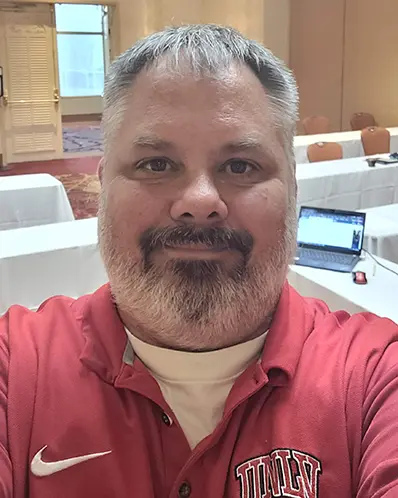
One of our favorite Native language youtubers at Spoken First is “Daybreakwarrior.” He posts tons of awesome Navajo language and culture videos. He likes to make the videos fun by showing how to speak Navajo in daily life and for different activities, posts songs with English and Navajo subtitles, and also posts tongue twisters and other fun language games. He hopes to show the versatility of the Navajo language. Here are some of our favorites:

This video shows how to build a snowman with instructions in Navajo:

This next video is a song about weight loss in Navajo, complete with both Navajo and English subtitles:

This video is Daybreakwarrior’s grandmother telling a joke in Navajo, again with Navajo and English subtitles:

And finally, a fun tongue twister in Navajo:

Be sure to subscribe to Daybreakwarrior’s channel and check out his other videos, and be on the look-out for new ones!

VN:F [1.9.18_1163]
Rating: 5.0/5 (1 vote cast)
Posted in Uncategorized | 1 Comment

Happy International Mother Language Day!

Today is a day for promotion of multilingualism, cultural and linguistic diversity, and protection of all languages. International Mother Language Day began on February 21, 1999, and commemorates the day in 1952 when students in Dhaka, Pakistan (now the capital of Bangladesh) were shot and killed by police while demonstrating for recognition of their language, Bengali, as one of the national languages.

UNESCO’s theme of this year’s International Mother Language Day is “mother tongue instruction and inclusive education”, with a focus on books for mother tongue education. Celebrate the day by thanking language teachers and instructors, advocates for endangered languages, as well as elders and fluent speakers who are essential to helping spread and keep their language alive.

VN:F [1.9.18_1163]
Rating: 0.0/5 (0 votes cast)
Posted in Uncategorized | Leave a comment

Free Online Course on ‘Aboriginal Worldviews and Education’

Have you ever taken an online course? If you’ve wanted to try it but haven’t had the chance, this may be the perfect opportunity: educational technology company Coursera has teamed up with the University of Toronto to offer a free online course called “Aboriginal Worldviews and Education.” The class focuses on “Indigenous ways of knowing and how they can inform and benefit all students.” Topics to be covered will range from using language to connect to history; historical, social, and political issues in Aboriginal education; cultural, spiritual, and philosophical themes; and how Aboriginal worldviews can inform professional programs and practices, among others. There are no prerequisites for the course, except for an interest in learning about Aboriginal history and worldviews.

The next session begins February 25th, 2013, and runs for 4 weeks. Upon completion of the course, successful students will receive a certificate signed by the instructor. To find out more information and to sign up for the course, visit the website for the course at:

https://www.coursera.org/course/aboriginaled

VN:F [1.9.18_1163]
Rating: 0.0/5 (0 votes cast)
Posted in Uncategorized | Leave a comment

Language Learning Begins Before You are Born

It has long been understood that babies recognize and react to their mother’s voice from birth, but recent research is delving in further to understand when language learning begins. A new study conducted by researchers in Tacoma, Washington and Stockholm, Sweden has uncovered that during the last 10 weeks pregnancy, babies are already learning language from their mothers.

For the study, researchers worked with 80 American and Swedish babies, evenly mixed between boys and girls. Thirty hours after they were born, they equipped them with headphones and a pacifier. The headphones played vowel sounds from their native tongue and a foreign language. The pacifier measured their reactions to the sounds by measuring the rate at which the baby sucked. The quicker the baby sucked on the pacifier, the more interest they found in that particular sound.

Researchers found that the newborns sucked for longer with the foreign vowel sounds, and sucked at a much quicker rate for the familiar sounds from their mother’s native language. This suggests that the babies have a familiarity with the particular language at birth, and also language differentiation begins before birth.

This study builds on what was concluded in a 2009 study done with German and French newborns. Researchers found that the cries of newborns with a mother that spoke either language nate had different melodies to their crying, showing that the nuances of language are learned in utero.

Although research suggests that language learning begins while babies are still in the womb, doctor’s stress it is not necessary to have any special equipment to enhance your baby’s language learning while pregnant. Language learning in the womb occurs naturally, it is only necessary to use your voice.

VN:F [1.9.18_1163]
Rating: 5.0/5 (1 vote cast)
Posted in Uncategorized | Leave a comment

Diné Speakers Tune in to Listen to Radio Broadcasts in Native Language

Diné speakers on the Navajo reservation across New Mexico, Arizona, and Utah can tune into KNDN AM Radio to listen to the radio in their native language. George Werito, called the Navajo Jay Leno by many of his listeners, is one of the radio personalities of the station. On the station, listeners can call in and inform others about road conditions, meetings, and other news and Werito will report it, often times throwing in games and trivia to make it fun.

KNDN AM Radio became a full time Navajo language station in 1978 and is one great example of how different forms of media are being used to help revive and save endangered languages. There are several other radio stations broadcasting in native languages including KYUK, in Alaska, and KTDB, in New Mexico.

Other forms of media that have been used to help keep up the use of native languages are through the internet. Different social media platforms, such as YouTube, Twitter, and Facebook, have helped connect native speakers, who may be spread far geographically, in unprecedented ways. These uses of media help continue the use of native languages, especially in the younger generations.

VN:F [1.9.18_1163]
Rating: 0.0/5 (0 votes cast)
Posted in Uncategorized | Leave a comment

University of Arizona, Tuscon “Revisiting the State of Indigenous Languages Conference” , June 17 – 18

University of Arizona, Tuscon’s American Indian Language Development Institute is holding a national conference in June called “Revisiting the State of Indigenous Languages”. The goal will be to address the current state of Indigenous languages and also to review the progress that has, or maybe has not, been made.

The idea behind the conference is to look back on what has happened since the passing of the Native American Language Act in1990 and 1992. The three questions the conference is based on are:

“Where have we been?

What do we know?

Where are we going?”

There will be keynote speakers, panels, discussions, along with a poster session.

This website has further information on the conference schedule along with how to register: http://aildi.arizona.edu/national-conference-2013

VN:F [1.9.18_1163]
Rating: 5.0/5 (2 votes cast)
Posted in Uncategorized | Leave a comment

Learn Dakota With Great Website

The Association on American Indian Affairs has launched a fantastic website featuring games, forums and children’s books teaching the Dakota language. The association is based on the Lake Traverse Indian Reservation on the border between North and South Dakota.

The AAIA’s site is full of resources dedicated to teaching youngsters and adults the Dakota language. As a Lakota speaker, I loved playing Caske Heye. While the differences in our two dialects proved to be a bit of a challenge, I loved the playful format and visuals. The site also features the opportunity to purchase instructive language books for kids. I’m personally leaning toward Sunka Wastewada, which translates to I Like Dogs.

The AAIA’s site offers numerous ways to learn the Dakota language, and is also interested in translating their resources into other languages.

VN:F [1.9.18_1163]
Rating: 0.0/5 (0 votes cast)
Posted in Uncategorized | 1 Comment

Seneca Language App in Development

A computer app currently being developed by Robbie Jimerson will soon translate English into Seneca.

Jimerson, whose grandfather is a fluent speaker of the Seneca language, is developing the app with the support of the Rochester Institute for Technology and the Seneca Nation of Indians. While Jimerson is not a fluent speaker of the language himself, he has utilized his programming skills to create what has become the Seneca Language Revitalization Project. Though it may take years to complete the computerized dictionary, Jimerson has made great strides in decoding the complex Seneca language.

The Seneca nation has provided a $200,000 grant for the project, and will decide how the app is distributed.

VN:F [1.9.18_1163]
Rating: 5.0/5 (1 vote cast)
Posted in Uncategorized | Leave a comment